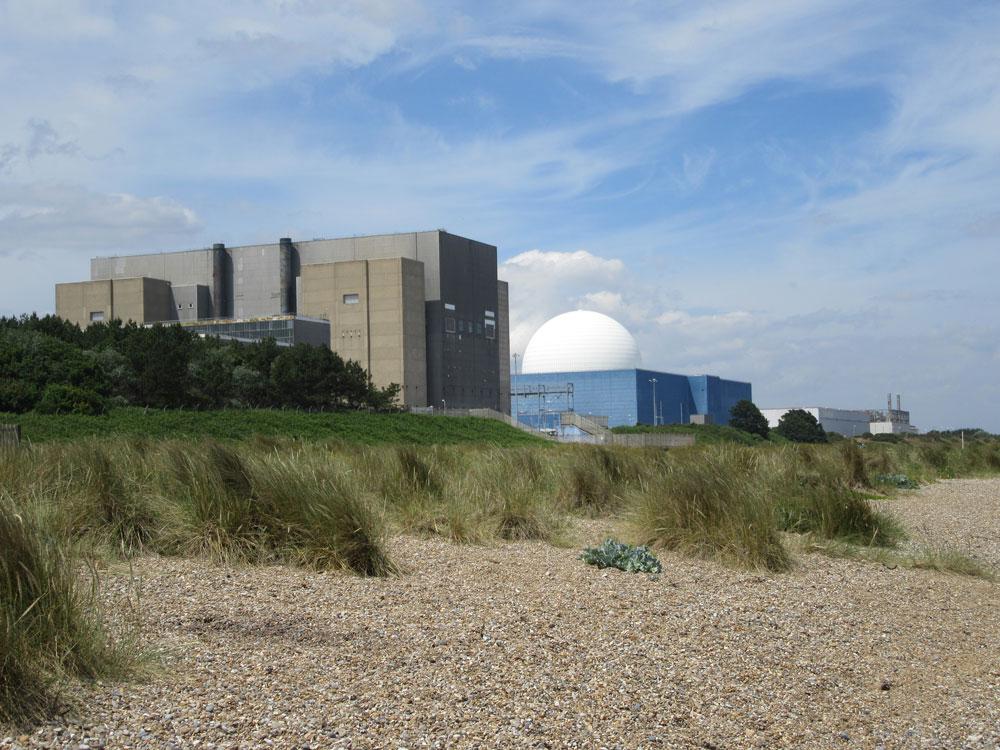
Robotic solutions are being trialled at the Nuclear Restoration Services (NRS) Oldbury site to tackle the most challenging aspects of legacy waste management.
Two complementary project trials are currently taking place at the site in South Gloucestershire.
The first is led by NRS as part of the Robotics and Artificial Intelligence Collaboration (RAICo) collaboration and involves tele-operated robotic arms for handling fuel element debris (FED).
FED is the material that historically housed nuclear fuel during generation and was removed to allow for the nuclear fuel to be separated and dispatched to Sellafield for reprocessing. This material, which is currently safely stored on site, must now be retrieved and sorted as part of the decommissioning process.
NRS’s current approach to sorting FED requires operators suiting up in full PPE, and using manual tools with grippers on the end, operating over thick protective walls.
The second project is Auto-SAS, an autonomous sorting and segregation system. It is led by NRS, funded by the Nuclear Decommissioning Authority (NDA) and delivered in collaboration with the NDA group and supply chain.
Auto-SAS is a longer-term programme designed to autonomously identify, categorise and sort more complex mixed radioactive waste, particularly waste that is difficult to handle manually and may currently be directed to higher-cost disposal routes simply because it cannot be easily separated.
The trials are working to explore whether a tele-operated robotic arm can give operators greater control while allowing them to work from a safer distance.
Phoebe Lynch, Head of Innovation at NRS, said: "NRS is passionate about harnessing the value of our sites and teams to support innovation. This project showcases how NRS can add value through externally funded projects which bring benefits to our organisation and the wider NDA group."
Prof Melanie Brownridge, NDA Chief R&D Officer, said: "Across our 18 sites we’re using robotics and innovation to help accelerate our mission and move our people further from harm. The learning generated here has value well beyond the site, and both programmes are designed with scalability in mind.
"Auto-SAS also has potential applications beyond the nuclear sector, with the technology capable of addressing complex waste sorting challenges in other industries."